Landing Page vs Website: What Works Better for Lead Generation?
A website helps people understand your business. A landing page helps people take one specific action. For service businesses running ads, the right choice depends on your offer, traffic source, customer journey, and follow-up system.
Quick Summary
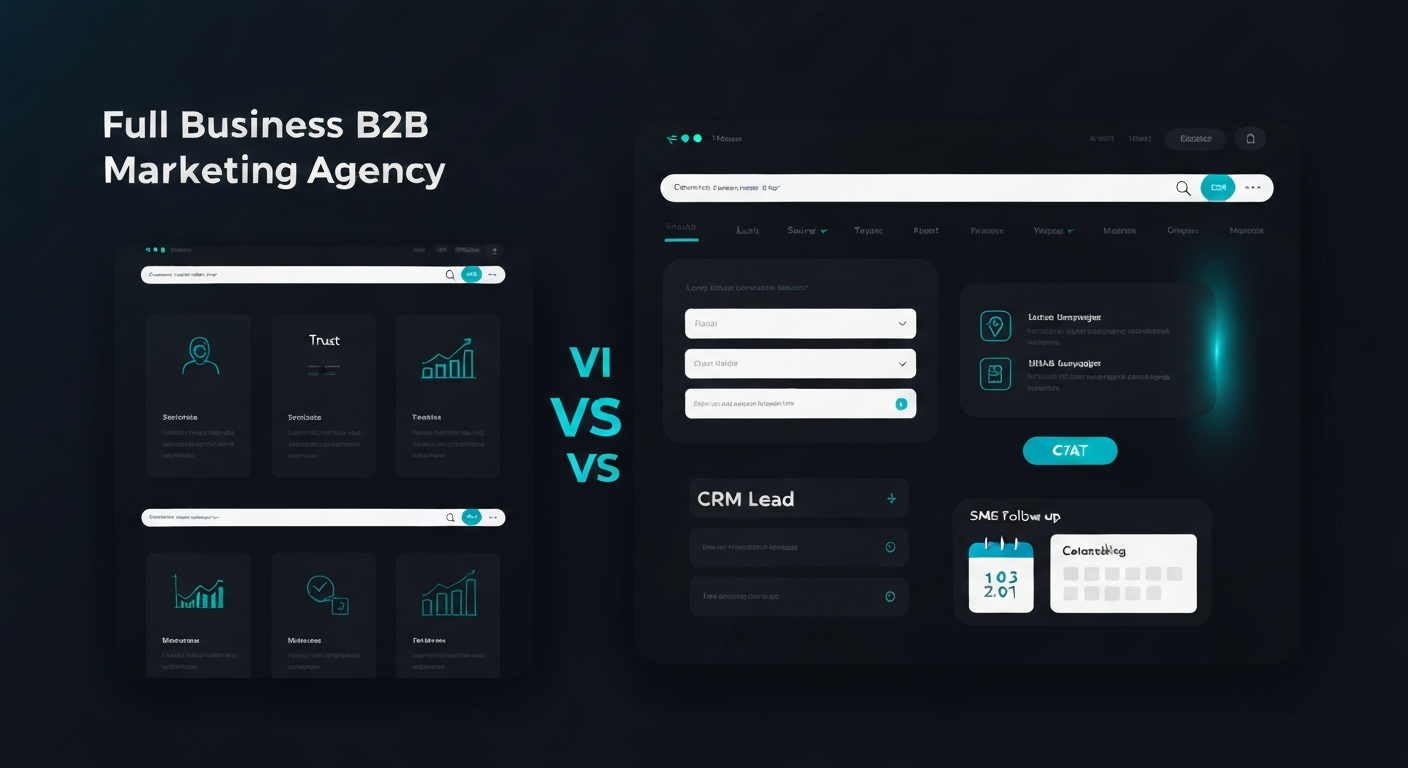
A website and a landing page are not the same. A website builds trust, explains your services, supports SEO, and helps visitors explore your business. A landing page focuses on one offer, one audience, and one action — usually booking a call, requesting a quote, or submitting a form. For paid ads and lead generation campaigns, landing pages often work best when connected to CRM, SMS/email follow-up, AI voice, and appointment booking.
- Use a website when you need full business information, SEO pages, trust, and service details.
- Use a landing page when you are running a specific campaign or paid ad offer.
- A landing page should have one clear CTA and fewer distractions.
- The best results usually come when the page connects to a strong follow-up system.
Table of Contents
A website and a landing page are both important, but they are not the same thing.
Many business owners treat them like they are interchangeable.
They are not.
A website is usually built to explain the full business. It may include a homepage, service pages, about page, contact page, blog, case studies, FAQs, reviews, and other trust-building sections.
A landing page is built for one focused goal.
That goal may be to book a consultation, request a quote, schedule an estimate, download a guide, claim an offer, or submit a lead form.
For lead generation, this difference matters.
If someone clicks a paid ad for "emergency HVAC repair," sending that person to a general homepage may not be the best experience. The homepage may talk about many services, many locations, and many unrelated details.
A focused landing page can speak directly to that person's need.
It can show the offer, explain the service, answer objections, show trust, include a simple form, and connect the lead to follow-up automation.
At TechLabCo, we help businesses build websites, funnels, landing pages, CRM automation, AI voice workflows, SMS/email follow-up, and appointment booking systems. The goal is not just to make a page look nice. The goal is to help visitors become leads and help leads become booked appointments.
What Is a Website?
A website is the main online home for your business.
It usually explains who you are, what you do, where you serve, why someone should trust you, and how they can contact you.
A good business website may include:
- Homepage
- Service pages
- Location pages
- About page
- Contact page
- Blog
- Case studies
- Testimonials or reviews
- FAQ section
- Booking or contact form
- Trust badges
- Internal links
- SEO content
A website is useful because not every visitor is ready to book immediately.
Some people want to learn. Some want to compare. Some want to check your services. Some want to read reviews. Some want to understand your pricing, process, or experience.
A website helps build trust.
It is also important for SEO because search engines need clear service pages, helpful content, and structured information to understand your business.
For most businesses, a website is the foundation.
But a website is not always the best place to send paid ad traffic.
What Is a Landing Page?
A landing page is a focused page built for one specific campaign, service, audience, or offer.
Unlike a full website, a landing page usually removes distractions.
It does not need a large navigation menu. It does not need to explain every service. It does not need to send visitors to ten different pages.
Its job is to guide the visitor toward one action.
Examples of landing page goals:
- Book a free consultation
- Request a quote
- Schedule an estimate
- Claim a limited offer
- Book a service appointment
- Download a guide
- Complete a lead form
- Call now
- Start a demo request
A landing page is often used with:
- Google Ads
- Facebook Ads
- Instagram Ads
- YouTube Ads
- TikTok Ads
- Email campaigns
- SMS campaigns
- Retargeting campaigns
- Industry-specific campaigns
- Service-specific offers
For example, a med spa might have a landing page for laser treatment consultations.
An HVAC company might have a landing page for A/C tune-ups.
A law firm might have a consultation request page for a specific practice area.
A real estate agent might have a seller valuation landing page.
The landing page speaks to one person with one problem and one next step.
Website vs Landing Page
Website
Common CTA: Contact us, learn more, book a call, view services
Best For:
- Building trust
- Explaining all services
- SEO content
- Brand credibility
- Long-term online presence
- Service pages
- Blog content
- About and contact information
- Visitors who want to explore
Landing Page
Common CTA: Book now, request a quote, claim offer, schedule consultation
Best For:
- Paid ad campaigns
- One specific offer
- Lead capture
- Appointment booking
- Quote requests
- Event or webinar signups
- Service-specific campaigns
- Faster decision-making
- Visitors with high intent
A website gives people the full picture. A landing page gives people one clear path.
Why Sending Ad Traffic to a Homepage Can Waste Leads
A homepage is usually built for many types of visitors.
That is not always bad.
But paid ads are different.
When someone clicks an ad, they clicked because of a specific promise, problem, service, or offer. If the page they land on is too general, the visitor may feel like they are in the wrong place.
Problems with sending ad traffic to a homepage:
- Too many navigation options
- Too many services competing for attention
- The offer from the ad is not repeated clearly
- The form may be hard to find
- The CTA may not match the ad
- The page may not answer the visitor's specific question
- The visitor may get distracted
- Follow-up may not be connected properly
A focused landing page can solve this by matching the ad.
For example:
Ad:
"Book Your A/C Tune-Up This Week"
Landing page:
A/C tune-up offer, benefits, service area, trust points, simple form, call button, appointment booking, SMS confirmation.
That is a better match than sending the visitor to a general homepage with multiple services.
How a Landing Page Lead Generation Workflow Works
Visitor Clicks the Ad
The visitor clicks from Google, Facebook, Instagram, email, SMS, or another campaign.
Landing Page Matches the Offer
The page repeats the offer, service, location, pain point, and next step clearly.
Visitor Takes Action
The visitor submits a form, clicks to call, books an appointment, or requests a quote.
CRM Captures the Lead
The contact details, lead source, campaign name, and form answers are added to the CRM.
Follow-Up Starts
SMS, email, AI voice, or appointment reminders start based on the workflow.
Appointment or Sales Process Begins
The lead is qualified, booked, reminded, and tracked through the pipeline.
Note: A landing page should not stop at form submission. The strongest landing pages connect directly to follow-up automation, CRM tracking, and appointment booking.
When to Use a Website
Use a website when your business needs a full online presence.
A website is best for:
- Building long-term trust
- Explaining multiple services
- Ranking on search engines
- Showing reviews and case studies
- Educating visitors
- Publishing blogs
- Supporting local SEO
- Showing service areas
- Explaining your company story
- Giving customers a place to verify your business
A website is also important because people may research you after seeing your ad.
Even if your ad traffic goes to a landing page, many visitors may still click around, search your brand, read reviews, or visit your main website before making a decision.
That is why the website and landing page should work together.
When to Use a Landing Page
Use a landing page when you need one focused action.
A landing page is best for:
- Google Ads
- Facebook Ads
- Instagram Ads
- Retargeting campaigns
- One service offer
- One industry campaign
- One location campaign
- Appointment booking campaigns
- Quote request campaigns
- Lead magnet campaigns
- Event or webinar campaigns
- Seasonal offers
A landing page is especially useful when you are paying for traffic.
If every click costs money, the page should be focused.
The visitor should quickly understand:
- What is being offered
- Who it is for
- Why it matters
- What happens next
- How to take action
What a High-Converting Landing Page Should Include
Clear Headline
The headline should match the ad and tell the visitor exactly what the page is about.
Specific Offer
Explain what the visitor is getting, such as a quote, consultation, estimate, demo, or appointment.
Trust Signals
Include reviews, credentials, service area, experience, guarantees if real, and proof where available.
Simple Form
Ask only for the information needed to start the conversation. Too many fields can reduce completion.
Strong CTA
Use one main action such as Book a Call, Request a Quote, or Schedule an Estimate.
Mobile-Friendly Layout
Most ad traffic may come from mobile. The page should load fast and be easy to use on a phone.
Call and SMS Options
Some people prefer calling. Others prefer texting. Make the next step easy.
CRM and Follow-Up Connection
Every form, call, and booking should connect to CRM, SMS/email follow-up, and appointment tracking.
Industry Examples
Real Estate
Website Role:
Builds trust with buyers, sellers, listings, service areas, and agent credibility.
Landing Page Role:
Captures seller valuation leads, buyer inquiry leads, or campaign-specific consultation requests.
Law Firms
Website Role:
Explains practice areas, attorney profiles, trust points, and contact information.
Landing Page Role:
Captures consultation requests for a specific legal service.
HVAC
Website Role:
Shows services, service areas, reviews, emergency support, and maintenance options.
Landing Page Role:
Promotes one offer such as A/C tune-up, furnace repair, or emergency service.
Beauty & Med Spa
Website Role:
Explains treatments, pricing guidance, before/after policy, consultation process, and trust.
Landing Page Role:
Captures leads for one treatment offer or consultation campaign.
Auto Repair
Website Role:
Shows repair services, location, hours, reviews, and booking details.
Landing Page Role:
Captures leads for diagnostics, oil changes, brake repair, or seasonal campaigns.
Coaches & Consultants
Website Role:
Explains expertise, offer, case studies, and authority.
Landing Page Role:
Captures discovery call bookings, webinar signups, or program inquiries.
Home Services
Website Role:
Explains service areas, services, reviews, and booking process.
Landing Page Role:
Promotes one service such as plumbing repair, handyman service, appliance repair, or cleaning.
Education & Training
Website Role:
Explains programs, admissions, tuition information, and student support.
Landing Page Role:
Captures program inquiries or advisor call bookings for one course.
Common Mistakes Businesses Make
- Sending all paid traffic to the homepage
- Using one landing page for too many services
- Having too many CTAs
- Asking for too much information in the form
- Not matching the ad message to the page
- Using weak headlines
- Hiding the form too far down the page
- Not making the page mobile-friendly
- Not connecting forms to the CRM
- Not triggering SMS or email follow-up
- Not tracking lead source or campaign
- Not testing the page before launching ads
Note: A landing page is not just a design. It is part of the full lead conversion system.
Already Paying for Leads? See What Better Follow-Up Could Mean
A landing page can capture the lead, but follow-up is what helps move the lead toward booking. If your business is already running ads, use TechLabCo's Lead Follow-Up Revenue Calculator to estimate how response time, booking rate, close rate, and customer value can affect monthly revenue.
What TechLabCo Builds
TechLabCo can help businesses build both websites and focused landing pages.
Our website and landing page setup can include:
- Website design
- Service pages
- Local SEO structure
- Campaign landing pages
- Lead capture forms
- Click-to-call buttons
- Booking forms
- CRM connection
- SMS follow-up
- Email follow-up
- AI voice follow-up
- Appointment booking workflows
- Lead source tracking
- Reporting dashboard
The goal is to make sure your page does not just look good.
It should help capture leads, trigger follow-up, and move prospects toward real appointments.
Explore Related Services
Funnel & Landing Page Design
Focused pages for ad campaigns, lead capture, and appointment booking.
Learn MoreWebsite Design
Modern websites built to explain your services, build trust, and support SEO.
Learn MoreLead Generation
Campaigns, landing pages, and tracking systems designed to create qualified opportunities.
Learn MoreCRM & Marketing Automation
Keep your pipeline, follow-up, appointment stages, and reporting organized.
Learn MoreAppointment Booking Automation
Book qualified leads into your calendar with confirmations and reminders.
Learn MoreAI Voice Agents
Human-sounding AI calling systems for lead follow-up, qualification, appointment booking, and reactivation.
Learn MoreSMS Marketing
Send fast follow-up, reminders, missed-call recovery, and reactivation texts.
Learn MoreEmail Marketing
Send confirmations, appointment details, nurture emails, and reactivation campaigns.
Learn More
Written by TechLabCo – AI Marketing Agency
TechLabCo helps service businesses and e-commerce brands generate leads, qualify prospects, automate follow-up, book appointments, and build better growth systems using AI voice agents, AI receptionist workflows, CRM automation, SMS/email campaigns, websites, funnels, and marketing systems.
Editor note: This guide was created for businesses in Canada, the USA, and global markets that want to improve landing pages, websites, lead capture, follow-up, and appointment booking.
Frequently Asked Questions About Landing Pages vs Websites
Read Next
How AI Voice Agents Are Revolutionizing Lead Follow-Up
Learn how AI voice agents help businesses in Canada and the USA follow up with leads, qualify prospects, book appointments...
Read Article
AI Receptionist for Small Businesses: Answer Calls 24/7
Learn how an AI receptionist helps small businesses in Canada and the USA answer calls, capture leads, collect details...
Read ArticleComments (0)
No comments yet. Be the first to share your thoughts!